Kysyttävää? Soita meille 05 - 375 3220
Free delivery for orders over 1000 € / 30 days Return policy

Subtotal: 7982.70 €
Kysyttävää? Soita meille 05 - 375 3220
Free delivery for orders over 1000 € / 30 days Return policy
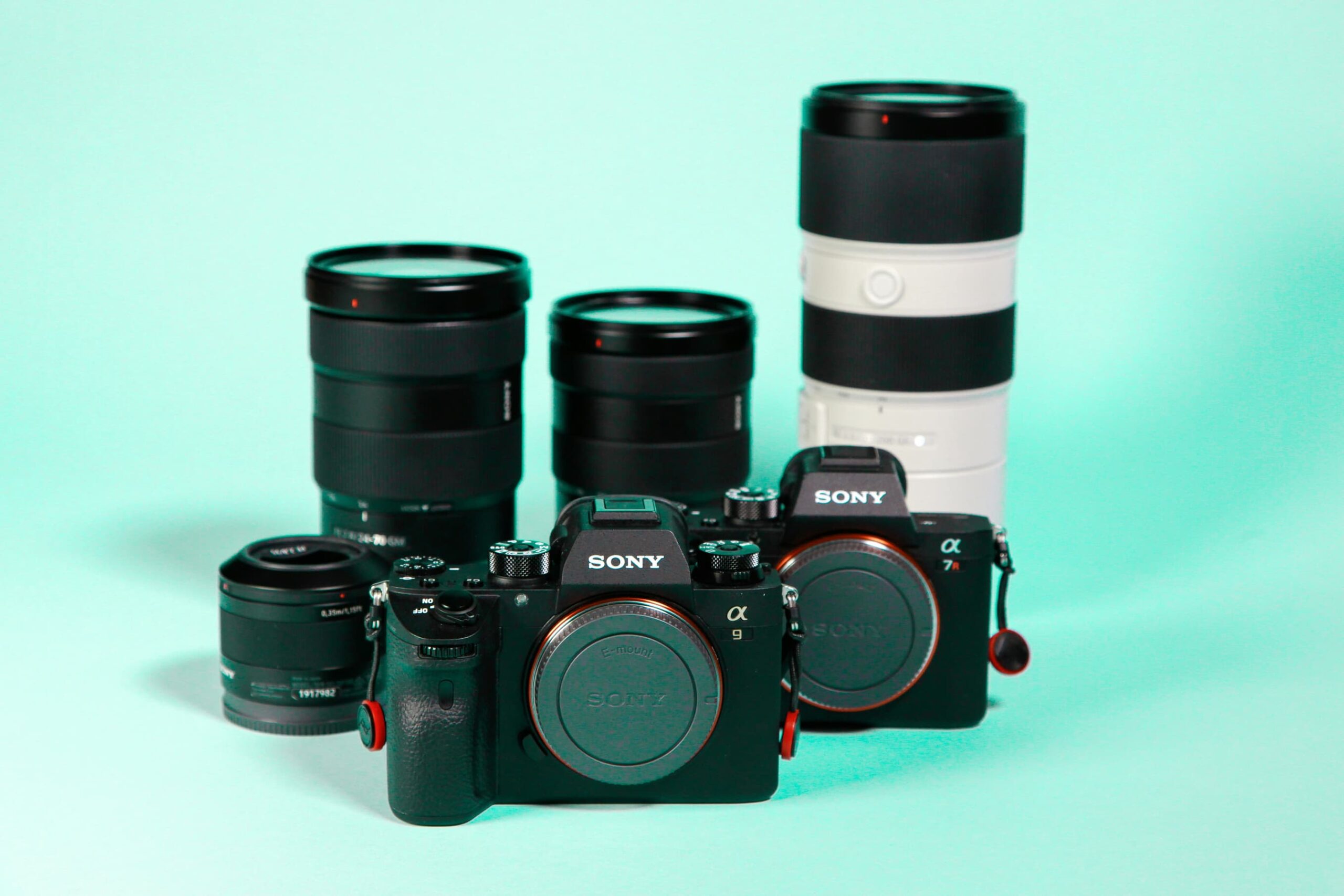
Choosing the right lens affects everything from the composition of the image to its technical quality and mood. Different lenses are designed for different situations, and the right tool makes it not only easier but also more fun to get the shot you want.
We present the three most common and versatile lens types - wide angle, normal and telephoto - using popular models from the Foto Monza range as examples. We also explain what a bayonet is and how to identify the right lens for your camera.
A wide-angle lens is a great tool when you want to squeeze as much as possible into your shot. Its wide angle of view is ideal for landscapes, architecture and tight interiors. The wide angle also emphasises perspective, creating an impressive sense of depth in your images.
Uses:
Example of the Foto Monzan range: Sigma 16-28mm f/2.8 DG DN | Contemporary
This fast (f/2.8) zoom lens is an excellent choice for full-frame cameras like the Sony A7 series. It's lightweight and compact, yet delivers top-notch image quality across the entire focal length range. Its continuous aperture (i.e. maximum aperture throughout the focal length range) makes it a great tool for low-light shooting.
A standard lens, typically with a focal length of 35-50 mm, is a favourite of many photographers for its versatility. Its angle of view most closely matches the natural view of the human eye, making it intuitive and easy to approach. Fixed focal length normal lenses are often very bright, allowing shooting in low light and beautiful background blur (bokeh).
Uses:
Example of the Foto Monzan range: Sigma 50mm f/1.4 DG DN | Art
This ”king of normal lenses” is part of Sigma's acclaimed Art series, renowned for its exceptional sharpness and image quality. The massive f/1.4 aperture makes it incredibly capable in low light and gives the photographer full control over depth of field, creating stunning portraits where the subject stands out against the soft background.
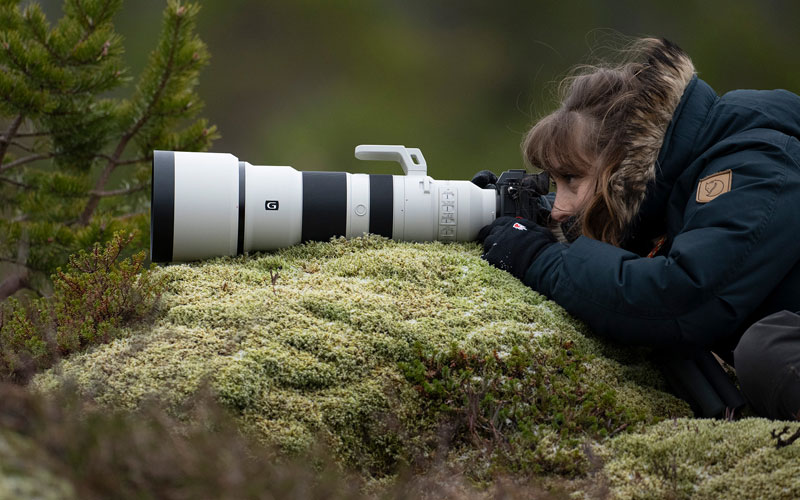
When the subject is far away, you need a telephoto lens. Telephoto lenses magnify distant subjects and compress perspective, making the background appear closer to the subject. They're essential for nature and sports photography, but they're also great for flattering portraits.
Uses:
Example of the Foto Monzan range: Sigma 100-400mm f/5-6.3 DG DN OS | Contemporary
This super telephoto zoom is like binoculars on a camera. It offers a huge focal range in a relatively light and compact package. A built-in image stabilizer (OS) helps you get sharp, hand-held images even at longer focal lengths. It's the perfect choice for the nature enthusiast or novice sports photographer.
Bayonet (English. lens mount) is a mechanical and electrical mounting system between the camera and the lens. For the lens to work on your camera, its bayonet must be exactly the same as the one on the camera body. Different camera manufacturers have their own incompatible bayonets.
So how do you identify the right lens?
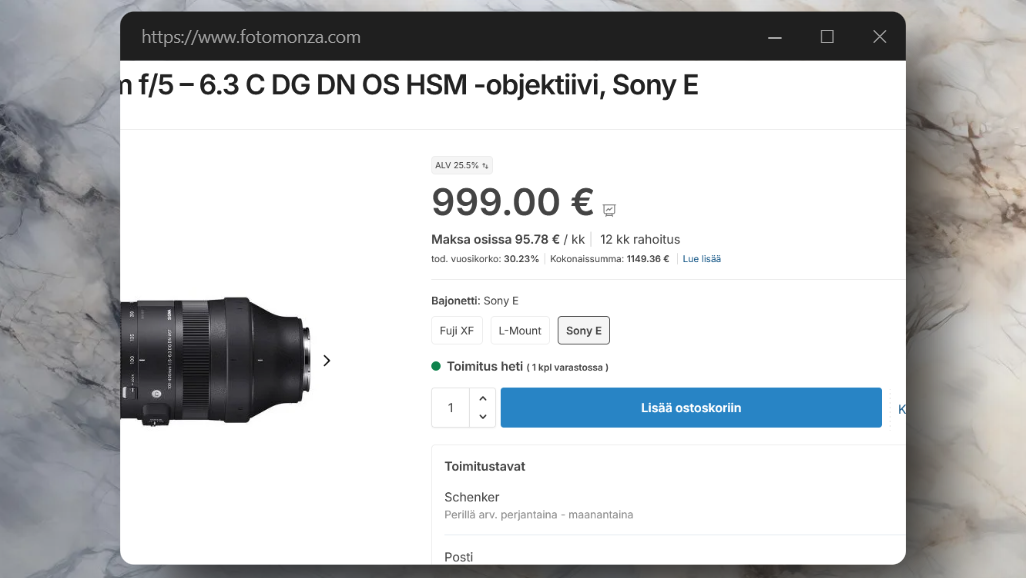
The Foto Monza product information shows which bayonets are available for the lens.
E-bayonet is a lens mount for Sony mirrorless system cameras (e.g. Alpha series). E-mount lenses are available for both APS-C and full-frame cameras.
FE (Full-frame E-mount) is a lens designed and optimised for Sony's full-frame mirrorless cameras. Although they cover the full-frame image circle, they can also be used on APS-C E-mount cameras, but in this case the angle of view is equivalent to a narrower telephoto lens (due to the cell's focal length).
A physical sign: The camera and lens body have white dot, which will be aligned when it is fixed.
EF (Electro-Focus): Canon's older, fully electronic lens mount, introduced in 1987. These lenses are designed for both full-frame and APS-C digital system cameras (DSLRs). EF lenses can be used on EOS R mirrorless cameras with an adapter.
EF-S (Electro-Focus Short back focus): These lenses are specifically designed for Canon APS-C digital SLR cameras (e.g. Canon EOS 700D series). They extend deeper into the camera body than standard EF lenses, and are therefore not compatible with full-frame Canon cameras without cropping or image cropping in-camera.
RF (Rethink Full-frame): Canon's newer mount for mirrorless full-frame cameras (EOS R system). The RF mount allows faster data transfer between camera and lens and the use of new optical structures.
A physical sign: The camera and lens body have red circle (EF, RF) or white square (EF-S), which are aligned at the time of fixing.
”AF-S”, ”AF-P”, ”Nikkor”: Usually refer to an older F-bayonet, used in Nikon's mirrorless SLRs.
F bayonet is Nikon's traditional lens mount, which has long been used on digital SLRs (DSLRs).
Z bayonet is Nikon's newer, larger mount for mirrorless full-frame (and APS-C, or DX) cameras (the Nikon Z system). The Z enables new optical innovations with a larger aperture and shorter back focal length.
A physical sign: Nikon doesn't have as clear a colour code as others, but both the camera and the lens have a white dot or a line for alignment.
Nikkor: A generic lens brand for Nikon. All lenses manufactured by Nikon that use an F-mount or Z-mount are Nikkor lenses.
Some manufacturers, such as Sigma, have their own abbreviations which can cause confusion when comparing lenses from different manufacturers. For Sigma, the most common are DG and DN.
DG (Digital Grade): This abbreviation indicates that the lens is designed and optimised for use in full-frame digital cameras. Although DG lenses are intended for full-frame cameras, they can also be used with APS-C cameras. In this case, however, the angle of view is more limited due to the aperture factor of the sensor.
DN (Digital Native / Digital Neo): This abbreviation means that the lens is designed to especially for mirrorless cameras. DN lenses take advantage of the shorter flange distance (distance from the lens mount to the sensor) of mirrorless systems, often allowing for a more compact and lighter design and optimised optical performance specifically for mirrorless cameras.
When buying a lens, always check the product name and specifications to make sure it is compatible with your specific camera make and model bayonet. On Fotomonza.com, you can see the lens bayonet options directly from the product card in clear selection buttons. If in doubt, contact our customer service team for professional help in choosing the right lens.
Shooting is always best when the camera bayonet matches the lens and the lens can be attached directly to the camera seamlessly - just as it was designed. Sometimes, however, photographers come across situations where they have to for example, a Sony camera and a Canon bayonet lens, for example when replacing equipment if the budget doesn't allow you to replace everything at once. In such cases, it is possible to use an adapter as a spacer to help fit a lens with a different bayonet to the bayonet of the camera, but in these cases you should be aware that the reliability is not on a par with a proper mount and problems may arise.
When using an adapter, you need to consider whether the lens and camera are mirrorless or mirrorless. Mirrored lenses can be connected to mirrorless cameras, but not the other way round. The adapter must always be the right one for the camera and lens to work, so be sure to check either the exact product specifications or customer service before purchasing an adapter.
The use of the adapter is often associated with exceptional situations and is not recommended as a primary tool.